
Ceres, the Nurturer, Through the Signs
Ceres is a dwarf planet (officially designated as 1 Ceres in the asteroid classification system) and is the largest object in the main asteroid belt between Mars and Jupiter, as well as the only dwarf planet within our inner solar system. It was initially classified as an asteroid but was reclassified as a dwarf planet in 2006 due to its ellipsoidal (geometrically round) shape.

1 Ceres
From NASA, “Ceres is one of the few places in our solar system where scientists would like to search for possible signs of life. Ceres has something a lot of other planets don't: water. Here on Earth, water is essential for life, so it's possible someplace else with that ingredient and a few other conditions could support life, as well. If anything does live on Ceres, it's likely to be very small microbes similar to bacteria. If Ceres does not have living things today, there may be signs it harbored life in the past.” (https://science.nasa.gov/dwarf-planets/ceres/facts/)
In astrology, Ceres represents nurturing, our love language, and our parenting style. It is our basic handling instructions. This planet is incredibly important in understanding the emotional needs of an individual and is especially important when considering one’s synastry with another.
Ceres’ meaning is profound and is founded on the maternal archetype and all that it entails. It represents how we care for others; it also reveals how we need to be nurtured. It defines our ability to let go and our grieving style, and it shows how we tend to react when we don’t get our needs met. It can embody both our sustenance and our trauma.
I like to say, “Ceres cares,” and the manner in which one cares, and how one prefers others to show how they care about them, is displayed by the sign and house it embodies in one’s chart.
Ceres can be expressed differently – as all planets and signs can – depending on the individual’s level of awareness and conscious behavior, as well as their mental health. It can also be expressed differently in women than in men (women inhabit/give femininity; men project/receive femininity), mostly due to it being a feminine archetype and the fact that we live in a patriarchal society where men are expected to shun the feminine and project their own feminine qualities and needs onto the women in their lives. This can vary, of course, and some people may be more imbalanced (more giving or receiving, instead of an even flow of both) due to other social or psychological factors.
In the end, all we can do is understand others and do our best to act in accordance with our own needs. Understanding Ceres in the birth chart is an essential component of this.
The Mythology of Ceres
Ceres is named after the Roman goddess, Ceres - or Demeter if you’re Greek - and is considered one of the four major asteroids, each named after prominent goddesses in the Roman pantheon. The other three are Pallas (2 Pallas), Juno (3 Juno), and Vesta (4 Vesta).

Ceres artistic depiction in poster, by PatStudioStore on etsy: https://www.etsy.com/listing/1789654435/ceres-goddess-poster-roman-goddess-ceres
Ceres was the goddess of fertility and agriculture and her mythology is closely aligned with those of Hades (Pluto) and Proserpina (Persephone, also Kore) – her daughter who was kidnapped from her by Hades/Pluto, who stole her away to the underworld.
The mythology goes like this, and I will stick to the names Ceres, Hades, and Persephone, as those are most familiar:
Ceres was a prominent deity in Roman culture and presided over the success of harvests and farming. She was also associated with fertility of women as well as of crops and was the role model of motherly relationships and maternal love.
Her symbols were the sickle, shafts of grain, and the cornucopia. Her astrological symbol is shaped like a sickle.

Symbol for Ceres
She was the daughter of the Titans Saturn (Kronos) and Ops (Rhea) and was both the sister and consort of Jupiter (Zeus). She was no shrinking violet or dainty maiden, but was depicted as a mature woman, full of the heartiness and abundance of crops and salt of the earth, the Goddess of the Grain.
Her beloved and beautiful daughter, Persephone, was picking flowers one day in a meadow, when Hades emerged from a chasm in the earth (Mount Etna in Sicily) in his golden chariot and snatched her for his bride. Disappearing into the Underworld, Persephone became his Queen of the Dead. Whether she was raped and abducted, or went willingly, or some combination of the two, is part of the mix here.

The Abduction (or Rape) of Proserpina, marble sculpture by Gian Lorenzo Bernini, 1622. Galleria Borghese, Rome.
Note: Hades was not considered evil or demonic in the ancient world. He was merely the shepherd of souls once they had left their bodies. Not necessarily a glamorous job, but someone had to do it.
Ceres was beside herself with grief and anguish at the loss of her precious daughter. She neglected the crops and soil, all the earth became infertile, and the people suffered because she was so lost and angry in her grief. Ceres petitioned Jupiter to have their brother (lots of celestially ordained incest) return her daughter to her, and wise Jupiter decided to evaluate the situation, as it could not really be known if Hades abducted and raped her, or if she went willingly.
Another version has Jupiter and Hades conspiring together to procure a bride for lonely Hades, and Jupiter suggested his own daughter with Ceres, Persephone, and Hades thought that yeah, his niece would make a great bride, bring a little light and beauty to the gloom of the Underworld, and so went up top to snag her, consent be damned, as gods do.
It was decided that since Persephone had eaten six pomegranate seeds – the food of the Underworld – during her stay with Hades, she would be required to spend six months out of each year with him in the Underworld and the remaining six could be spent with her mother in the realm of humans and crops. It was determined that this compromise would be the best that Ceres could ask for, since her brothers also had their own agendas and her wayward daughter did cross the line by “eating the fruits” of the Underworld – which is really just another way to say that she indulged in the sins of the flesh with her uncle while in the realm of the Dead. Their union was consummated, in other words.
This myth is really a story that explains why we have seasons, with Persephone’s time in the Underworld being the six months of fall and winter, and her time back with her mother (De meter, the mother) being the six months of spring and summer, when the soil is fertile and the harvest plentiful. Ceres’ grief and defiant neglect of crops and the soil during her daughter’s absence is the continuation of her protest against the male gods’ joint decision that their desires superseded feminine choice or maternal love and protection. She allowed the world to flourish once again, once her daughter returned to her, but remained steadfast that the world would suffer so long as her daughter was taken from her.
The gods kind of liked this, as their suffering caused reason for humans to petition and worship the gods more. So, it worked out for everyone.
Essentially, Ceres ended up with shared custody after a forced, nasty divorce and had to make the best of her situation. She remained half bitter and resentful, half abundant and plentiful, and her role in the astrological chart reflects this.
And if Persephone went willingly, finding the offer to become Queen of the Underworld instead of a perpetual maiden smothered by her overbearing mother whose supremacy in the world of light and life no doubt outshone her, and perhaps enjoyed the lavish attention and desire she received from desperately lonely and broody Hades, then we have another angle with which to view Ceres. Not just as a devoted mother, but perhaps as a hovering smother-mother, one who refuses to allow her child to become her own person as much as she gains her own identity from that of Super Mother to her divinely fair child. A child who can never be more than a helpless maiden who needs her mother’s protection and devotion.
Persephone is now forever associated with the equinoxes – that doorway between worlds and seasons when she either leaves (fall equinox) or returns (spring equinox) and has to say goodbye to one world she inhabits as either ruler or child and be reunited with either lover or mother. She is the balance between the two worlds. She is the mythological embodiment of duality, of balancing light and dark, integrating inner child and adult.
Ceres, on the other hand, is firmly cemented in the world of the living (as a goddess) and is loath to be a part of the world of the dead but is not above dishing out powerful punishment in the form of her withdrawal when she doesn’t get her way. Thus, she is associated astrologically with both maternal nurturing and grief, giving life and experiencing difficulty with letting go, that which sustains us and that which traumatizes us, and how we go about dealing with both.
Ceres, Pluto (Hades), and Jupiter have a complicated relationship. When they interact in a chart, whether it’s natal, synastry, composite, progressed, or transit, you can be sure some dramatic power struggles will ensue around themes that involve motherhood, children, inner child issues, trauma, and both providing and receiving care and nurturing.
Further, I would consider Ceres the ruler of Virgo (instead of Mercury; Gemini can have the Trickster), Persephone the ruler of balancing scales Libra (instead of Venus where she can languish comfortably in Taurus), and Pluto obviously stays where he is in Scorpio and Jupiter in Sagittarius. These are just my thoughts, of course, and I don’t expect the astrological community to agree or take this up anytime soon.
Note: The word “cereal” comes from Ceres’ name and she was honored in both spring and harvest festivals (the Romans had a festival in her honor called the Cerealia, a 7-day festival in April) as well as during marriages (for fertility) and funerals (for letting go, grieving, and processing trauma).
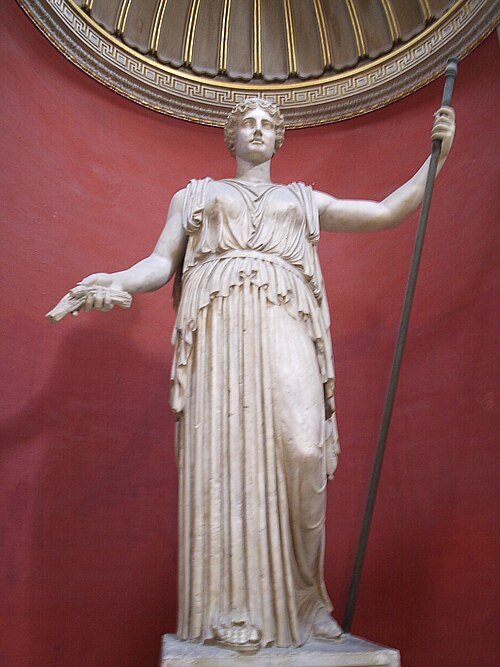
Marble, 430 AD; Roman copy of Greek statue of goddess Ceres by Phidias, located in the Round Room in the Pio-Clementine museum of the Vatican, Vatican City, Rome.
-
Nurturing style: In independent, leadership, action and combat-oriented Aries (ruled by Mars), the nurturing isn’t very soft and cuddly, nor is that sort of handling required. This is the “I’ll do it myself” placement, and high energy, personal initiative, independence, and accountability is the vibe. This native shows they care by doing physical activities together rather than by coddling or fussing, and by letting others be themselves. They nurture others into self-sufficiency and feel nurtured when others sail off into success because of the guidance the Aries Ceres native has given them, and when others do physical activities with them instead of coddle them. Action is favored over words. There may be a fierce protective instinct here, and when challenged this native may spring into defensive action to protect their loved ones from outside threats. But this Ceres aims to inspire their loved ones to become self-empowered, self-reliant, and resilient and will allow them to face their own battles and challenges without intervention unless absolutely necessary.
What they need to receive: Feeding the spirit; space, independence, freedom to be self-sufficient, physical activity, deference, and respect. Aries has a “me first” mentality, owed to its being both the cardinal fire sign and being first in line in the zodiac. Essentially, if you want something out of them, you should be prepared to provide something that benefits them first.
What they abhor: Being dominated or caged in, having to wait, being ignored, not being in charge, being bored, being denied or told “no”, stagnancy.
How they react when their needs aren’t met: When they don’t get their needs for independence met, Aries Ceres can be explosive and combative and may impulsively and reactively cut people off and out of their lives before they have the chance to think about the consequences. And they may not care about any consequences because they certainly know how to take care of themselves.
How they grieve and let go: When facing grief or when required to let go, this native may impulsively burn it all down instead of patiently experiencing the grief process and painful phases as they arise and shift. Their natural style is to cut abruptly and run and never look back. They may also be prone to thinking they can go through it alone rather than seeking support or guidance. It may seem powerful, and faster, to face grief head-on and courageously but attacking grief like a problem to be conquered is not usually the way to get through it successfully. This native may do well to learn to slow down and find strength through the full experience, including sharing it with others, rather than plowing through it in haste and impatience. If they do not process their grief effectively, they can develop anger management issues or even a heart condition.
-
Nurturing style: In comfort and security-seeking Taurus, nurturing feels luxurious. The sign most affiliated with growth, abundance, patience, and savoring life’s pleasures will seek to provide this for their loved ones when Ceres is in Taurus in the natal chart. They tend to create havens around themselves and their loved ones, and you will likely find their immediate environment filled with plants, flowers, artwork, candles, soft lighting, and delicious food. They keep their pantries well-stocked. They keep champagne on hand “just in case.” They have green thumbs, and this applies to more than just plant life: they intuitively know how to attune to people, plants, and animals and determine just what they need to thrive – the type of environment, nutrition, exercise, rest – and provide it amply and generously. As long as they themselves feel secure, stable, serene, and comfortable, you can be sure they will generously radiate serene abundance all around them.
What they need to receive: Feeding the body; physical and sensual comfort, regular body work, physical closeness with loved ones (big hugs required often), emotional and physical stability, financial security, luxury, delicious and nutritious meals, regular exposure to serene and beautiful environmental surroundings like flowers, gardens, and lush landscapes, a slow pace in all things, and more sleep than most.
What they abhor: Being rushed, not having ample funds, sterile rooms with neither a view nor any plant life and/or bad interior design, scratchy fabrics, having their order disrupted or their way of doing things dictated, being woken up from sleep (even by an alarm), uninspiring food, unkept or untended landscapes or gardens.
How they react when their needs aren’t met: Bulls do have horns, and the saying “acting like a bull in a China shop” can definitely apply to Taurus Ceres when they have their stability or serenity disrupted. Taurus can be Ferdinand the Bull, peacefully munching flowers on the hillside when all is well but can become a raging beast when their peace or their possessions are robbed from them. Woe betide anyone who wakes them from precious slumber, or who rushes them into anything before they are ready. Taurus Ceres can dig in their heels and show their obstinate and stubborn side when threatened with loss of peace, stability, or comfort, and may develop anxious or stingy behaviors rooted in a scarcity mindset if they are kept in unstable conditions for too long. They can also allow their environments to go neglected, which is the first indication that Taurus Ceres is unhappy or dissatisfied.
How they grieve and let go: Taurus Ceres has a hard time letting go of anything they are attached to. As a fixed earth sign, material possessions and things (and people) they consider “theirs” are, in their minds, forever theirs. Losing something or someone can be devastating for them. They may actually never fully let go of their attachments, and going through breakups, bankruptcy, or the death of a loved one can break their spirit. When they love, they do so with their full self, body, heart, mind, and soul. In loss, they suffer great traumas that can affect their bodily systems and structures and they may suffer from auto-immune diseases or other chronic health conditions due to holding onto pain and trauma in their bodies. They may resort to comfort eating or even hoarding food in times of stress and grief. They like their possessions to stay stable and unchanging and may have a hard time with relationships evolving due, say, to children growing up and away, or to partners aging and developing different needs and limitations.
-
Nurturing style: In curious and socially connected Gemini, nurturing takes on a lighthearted quality of intellectual stimulation and sharing ideas and stories. As a mutable air sign, Ceres in Gemini likes to provide their loved ones with mentally engaging activities and entertainment like games, puzzles, walking through mazes or art galleries, or attending community plays of Shakespeare in the Park. They love novelty and youth – anything new and shiny – and wherever their attention goes (and it goes everywhere, non-stop), is where their nurturing will flow. They love the two-way flow of mental energy, both turning people on with their own witty intellect and being sparked into inspiration by others. They seek to light others up with excitement and awe on a continual basis, for this is what provides them the most joy in life.
What they need to receive: Feeding the mind;mental stimulation, entertainment, exploration, an endless variety of unique experiences with interesting people, exchanges of ideas, spontaneity, sparkling and effervescent conversations, being part of (and posting online) all the exciting and fun new venues, shows, shops, and restaurants in town, a constant stream of creative and innovative ideas, designs, and people.
What they abhor: Routine, staleness, predictability, restrictions, boredom, conformity, humorlessness, solitude, dullness, being tied down or even “settling down” (strict lifelong monogamy might be challenging).
How they react when their needs aren’t met: The absolute worst thing a Gemini Ceres can be is bored and alone. This will cause them to become anxious and restless, and they may throw themselves into anything and anyone just to get a spark. Feeling misunderstood will also send this native into a tizzy, and they may go out of their way (and their mind) to track down the person doing the misunderstanding in order to set them straight – that, or they openly dismiss and disregard the person as being “too dull to understand.” They may have mood swings due to their changeable, mutable nature, and may develop an even more pronounced dual nature (hot/cold, happy/depressed, outgoing/withdrawn) if they are feeling unnurtured.
How they grieve and let go: The Mercury-ruled signs are prone to overthinking and rumination. Gemini tends to talk, talk, talk, and they will find a therapy group or community that they can pour their hearts out to when grieving. As a mutable sign, they are blessed with an increased ability to roll with the changes and are less apt to hold on to people or things that are long gone. They are an inherently fun-loving and forward-thinking sign, so moving on is not usually something that takes Gemini Ceres much time to achieve. If they do not process their grief effectively, however, they may develop paranoia.
-
Nurturing style: Caregiving Cancer fits nicely with Ceres, and when in this sign the native will be maternal and warm, intuitively knowing exactly what their loved ones need and prepared to provide it at all times - especially in the food department! They love to cook and/or share food with their loved ones. They have an enhanced ability to create a warm, inviting space where others feel safe and nourished, fostering growth and healing. Their deep empathy allows them to naturally attune to subtle cues in their loved ones and in their environment, reacting to any imbalance with exactly the right touch to soften any rough edges and to offer the support and reassurance needed so they may thrive. Cancer Ceres is a natural cultivator and nurturer of potential in all its forms, in both people and ideas, and creates a fertile ground for growth and transformation. They are devoted to family and tradition, upholding it like it is law. They have a long memory and feel a living connection to their ancestors.
What they need to receive: Ceres in Cancer needs emotional safety and attunement and the comforts of a cozy home with their loved ones close by. They need security, in all its forms. Since they are so empathetic, they need compassion and frequent reassurance in return. They act as mirrors to their loved ones, and if they don’t feel reflected in turn, they can tend to feel bereft and alone in the world. They need to feel valued for the family and community they work so hard to cultivate. They need to feel needed.
What they abhor: Non-reciprocation and being taken for granted are Cancer Ceres’ pet peeves. They tend to go above and beyond for their loved ones – often too much and too far, and in “smother mother” territory – but if they do not receive equal attunement, pampering, and attention they can feel very hurt.
How they react when their needs aren’t met: Mood swings, passive aggression, guilt trips, and general crabbiness are the hallmarks of unhappy Cancer Ceres. They absolutely take things personally and will cycle through painful tears and emotional lashing out and bereaved withdrawal. They expect someone to come check on them and ask, “What’s wrong?” at least several times before they will be convinced enough of their sincerity to unload their grievance on them. Cancer represents both the mother and the child, and when Cancer is happy and fulfilled, the mother side comes out; when neglected, you will get the child side. Because they are so good at attunement and intuitively sensing what their loved ones need, when they are not met with the same they feel inordinately hurt. “I shouldn’t have to tell you what I need!” is a common refrain from them in these cases.
How they grieve and let go: The crab claws of Cancer are tenacious and do not easily let go of anything. In fact, they are the sign most likely to hold a grudge (even more so than Scorpio) and to keep a grievance alive because they cling so tightly to the past. In mourning a loss, they are also the most bereft of all the signs because they feel the loss so deeply. They are the types to create a shrine to their lost loved one and create a ritual around their remembering. They need lots of support from loved ones while they are grieving, which will help them through the process in a productive way. Left to their own devices, they may linger in grief indefinitely.
-
Nurturing style: Bold Leo Ceres loves to nurture in a fantastic, over-the-top way. They want to be noticed for their grand style of lavishing luxury upon their loved ones and remarked upon for how well they provide for their needs. These natives are the ones who will proudly display their “#1 Mom/Dad” paraphernalia. Leo Ceres loves entertaining and will be a happy hostess or host that dazzles their guests and will ensure they leave with something to gush about to their friends. If this native is a parent, they will provide their children with beautiful, fashionable, and expensive clothes, and sign them up for all the extracurricular activities they can to both position them in society and to ensure their success, for they see their loved ones as extensions of themselves. This Ceres has the ability to use their glamorous creativity and warm generosity to inspire others, bringing more joy into their lives by making each person feel valued and special.
What they need to receive: Feeding the ego; Ceres in Leo needs grand gestures and heartfelt praise, validation and approval, and not just once but consistently. They also need their downtime so that they can prepare for their next performance. They love gifts of luxury, self-care, and prizes for their hard work and effort to provide such style and comfort for their loved ones. They love public appreciation (such as being proudly posted about on social media) and crave a mix of both tenderness and strength from their loved ones.
What they abhor: Other people’s drama, being upstaged, dark, depressing, intense and heavy situations (or people) that aren’t fun, being unappreciated, being ignored, being treated poorly (or like they are not royalty), not being rewarded for their efforts, being challenged about how they care or nurture or questioned about their involvement.
How they react when their needs aren’t met: Leo Ceres can become petulant, withdrawn, viciously defensive, and passive aggressive when feeling unnurtured. Diva behavior is not uncommon. Since they crave praise and recognition, they are not above a little healthy competition to remain top dog.
How they grieve and let go: As a fixed fire sign, Leo Ceres will fight tooth and nail to keep what they love and they will not be shy about it. They are valiant and courageous when it comes to facing grief, however, and once they accept the situation they take on the process with gusto, as they realize the pain actually opens their hearts even wider.
-
Nurturing style: In Virgo, Ceres feels at home. This mutable earth sign is centered on acts of service, the harvest, and the discernment of the wheat from the chaff, the good from the bad. Virgo Ceres loves a good system, and no one can create a more harmonious or functional system than they can. They include their loved ones in their system and create well-organized routines around nurturing that they execute with precision. They are excellent craftspeople and gardeners, and excel at working with their hands, so keeping their environment tidy and running like a well-oiled machine is how they show their love. They embody care through conscientious acts of service, making sure every detail is addressed and the nuance of every need anticipated, providing both holistic care and stability. They sense the spiritual inside of the material, and this fuels their drive for the perfect manifestation of the divine in physical form. This includes their loved ones and their environment, whom they desire to assist on their paths to inner and outer perfection and self-realization.
What they need to receive: Feeding the need for peace of mind; adherence to and faith in their system because it reflects faith in them, help in the administration and execution of their fine-tuned system, seeing the fruits of their labors in calm, happy, healthy, and thriving loved ones and a clean and orderly environment.
What they abhor: Disorder, uncleanliness, uncouthness, disregard for their fine-tuned systems that they continually calibrate for improvement for the benefit of the family or community, inattention to details, sloppiness.
How they react when their needs aren’t met: Virgo Ceres can be extremely critical and, as one of the Mercury-ruled signs, verbally attack those who disregard them in precisely targeted ways. They may withdraw into contemplative silence and introspection to process their feelings and devise a new plan for moving forward – without you.
How they grieve and let go: As the most methodical sign of the zodiac, Virgo Ceres will systematically address each facet of their pain, turning each sting over and over and investigating it until they reach full, holistic understanding. They are quiet, private people, and will not grieve publicly. When they need to release something or someone, they may at first feel lost in the chaos that occurs when their system they’ve created and maintained so meticulously has been disrupted, but through their fastidiousness they will recreate order from the chaos and find peace in a new system or process that operates without the lost thing. They know it is unhealthy to hold onto grief for too long, so they work the grief process like well-seasoned pros.
-
Nurturing style: Balancing Libra Ceres loves their friends, likes to socialize, loves “falling in love”, loves music and going to concerts, may be skilled in playing a musical instrument of some kind, may have interests in collecting art, “objects of beauty,” and new and interesting friends who they collect like art; loves to throw parties, spend money, and travel, and shows their love by beautifying spaces (including themselves) and providing beautiful experiences to their loved ones with a goal of promoting harmony and grace. This is a Venusian Ceres (Taurus is the other), so serenity and beauty are prized and shared, with an emphasis on the mental and intellectual component of relating. Support often comes from this native in the form of stimulating conversation, shared ideas, and fostering the ideals of unity, fairness, equality, and justice.
What they need to receive: Libra Ceres needs peaceful and harmonious partnership above all else. They also prize tact, consideration, good manners, mutual respect (as in support of one’s inherent authenticity, humanity, and agency), fairness, cooperation, and amicable give and take.
What they abhor: A vacuum; this Ceres can’t stand solitude or empty spaces. To them, life is meant to be enjoyed with others, and with pretty things and in pretty places. They despise unfairness and injustice and will often take the side of the underdog, fighting for equality.
How they react when their needs aren’t met: Peace-loving Libra Ceres is not above fighting for what they deserve or for what they believe in. In fact, Libra uses its status as an intellectual and logical air sign quite well as a fierce advocate for justice. You may get more than you bargained for if you find yourself in an argument with a Libra Ceres, who knows just how to level the playing field to their own advantage and one-up their opponents with precision, logic, and detached rationale.
How they grieve and let go: Libra Ceres is perpetually seeking balance, both in their outer environment and in their inner world. When grieving, they may take part in balancing activities like meditation or yoga, or in creating artwork or something beautiful to express their pain. They do not avoid grief, because they know to repress it inside themselves will lead to further imbalance, so they willingly address it in a fashion that allows them to grow from the experience in newfound peace and understanding. Letting go may be painful for them, but they also can tell when its time to do so and, again, will not linger with something past its expiration date due to a desire to avoid the imbalance of holding onto something or someone toxic. When it’s over, it’s over, and they seek peace more than anything else.
-
Nurturing style: Scorpio Ceres transforms those they love by acting as a mirror to them, exposing what is hidden, and awakening what is dormant within them. They are serious nurturers and aim to evolve their loved ones as well as themselves. Think of them as your personal psychologist! This perceptive and intuitive Ceres needs deep soul merging and attunement, values trust above all else, and shows they care by intuitively aligning with and mirroring their loved ones. They have magical healing powers, they understand herbs and medicines, and the concept of poison and antidote being in the same substance – and they realize this alchemy extends to the human psyche as well as to plant medicine. They are profound and intense caregivers, and they expect the same in return.
What they need to receive: Scorpio Ceres requires depth and attunement, presence, full attention, privacy, mutual growth, self-discovery, vulnerability, trust, purpose, intention, and awareness. They feel cared for when loved ones give their full attention and devotion. They thrive on emotional intensity and may enjoy or even thrive from drama because it fulfills their need for intense passion and transformation. They are emotionally committed to those close to them. The way they seek nurturing and provide care for others has deep emotional undercurrents tied to their sense of security and self-worth. Their nurturing qualities are interwoven with issues of trust, loss, and renewal, especially in the context of resources and personal value. It is important for them to learn the balance between attachment and detachment, to provide care without suffocating or controlling.
What they abhor: Lies, suspicious activity, withholding, refusal to grow and evolve, repetition without advancement, distraction, lack of purpose, cluelessness, carelessness.
How they react when their needs aren’t met: Scorpio Ceres does not suffer fools gladly. This Ceres will lash out when their needs aren’t met and will fearlessly call out any behavior that isn’t aligned with their program. They can be retaliatory and, since they know you so well, will deliver a precisely calibrated sting. This does not mean they don’t suffer from hurt feelings – it is precisely because their feelings are hurt, and, from their perspective, you allowed them to experience these hurt feelings instead of protecting them or preventing them from their pain, when they would always be one step ahead of such a thing if the roles were reversed, that they seek to dramatically bring your attention to the matter.
How they grieve and let go: Scorpio can be obsessive, but they can also be ruthless. They can have a hard time letting go emotionally if it wasn’t their choice but can also cut someone off brutally once they realize the time has come. They have no fear whatsoever of the grieving process, though they do feel things very deeply and don’t avoid suffering. Their “evolve or die” mentality ensures they go through it so thoroughly – mentally, emotionally, physically, and spiritually - that they never have to go through it again. They know that going to the darkest depths of the soul brings the regeneration, rebirth, spiritual growth, and power they crave.
-
Nurturing style: Sagittarius Ceres shows they care by generously sharing knowledge and teaching wisdom, and they find fulfillment by inspiring and motivating others to explore the world and open their minds and hearts to new adventures. They like to share travel and new experiences with their loved ones and encourage growth and risk-taking. They love a good debate and are constantly learning new things; they thrive when they can inspire others mentally, physically, or spiritually. They have a brutally honest, though joyful and optimistic, style, and you will always get the truth from them. This Ceres is a seeker, and they want you to come on the never-ending adventure with them.
What they need to receive: Constant access to adventure and learning, a good sense of humor for their endless jokes and banter (and pranks), regular physical activity (including sex), enthusiasm, independence, space, and a constant stream of inspiration.
What they abhor: Restriction, ignorance, lies, blandness, routine, closed-mindedness, inhibition, lethargy, boredom, literality, indifference, evasiveness.
How they react when their needs aren’t met: They can get haughty and self-righteous when their needs aren’t met. They may adopt a philosophic stance and start speaking in soliloquies, putting you through a tedious lecture you didn’t sign up for. Their aim is to enlighten you, so that you can learn and grow from your experience of letting them down.
How they grieve and let go: Nobody lets go faster than a Ceres Sagittarius! They move on like it never happened. They grieve from a philosophic mindset and may apply spiritual principles and practices to their grief process to help them ultimately rise above it and move on. They see everything as a learning opportunity and approach grief and letting go as stepping stones for personal growth.
-
Nurturing style: This pragmatic, Saturn-ruled Ceres nurtures ambition and success in those they love and shows they care by acting as solid, reliable containers for their loved ones to find success and fulfillment. They may show they care by providing well-packed lunches and clean, pressed, quality clothes and a clean home to come home to, and they expect acknowledgement and gratitude for their efforts. They ensure quality educations and solid, disciplined upbringings are provided for their children. This does not necessarily mean they will perform these tasks of provision themselves, just that they will ensure it is provided, and outsourcing the work (getting or paying someone else to do it) is not outside of their scope – just like you would outsource education to a school system, it’s rational. They are not sappy, emotional caregivers, and if that is what you need, they may outsource that too, which in their eyes still falls within the purview of providing. Personal care is not so much the means as much as the final outcome. If a “love language” could be assigned to Capricorn Ceres, it would be acts of service or gifts. As parents, their aim is to foster self-reliance, independence, resilience, duty, and responsibility in their children.
What they need to receive: Authority and respect (when respect means deference to power and authority, not necessarily respect as mutual freedom), support, containment, recognition, admiration for their efforts and achievements, financial security, being financially provided for as a reward for their efforts and/or gifts, material provision, adherence to the rules, boundaries, and expectations (which are often hierarchical and founded on conservative or traditional social structures), gifts in the form of well-made luxury items that signal success and status. They are not offended by transactional relationships.
Note: if in the female or feminine role, they need the “male” in the relationship to take on the traditional male role of provider, protector, and disciplinarian while they take on the traditional female role of childbearing and nesting. If in the male or masculine role, they will default to the traditional provider role and require the “female” in the relationship to take on the traditional female role.What they abhor: Clinginess, excessive emotionality, frivolous spending, time wasting, disrespect, laziness, vulnerability, spontaneity, loss of control, being financially destitute, loss of status, disregard for tradition, traditional gender roles, and/or the patriarchal social order.
How they react when their needs aren’t met: The Capricorn Ceres can go cold and withdraw, giving the silent treatment when their needs for recognition, admiration, and respect are not met. If you did not appreciate all they did for you when you had it, then they will ensure that you miss it when it is gone. They can become manipulative and passive aggressive (they excel at guilt tripping) in an attempt to regain control, order, status, and/or respect (their definition of respect, which is submission to power), yet they will not give one inch of ground when it comes to a stalemate.
How they grieve and let go: As Saturn is part of this Ceres’ makeup, they tend to compartmentalize grief with an air of stoic resilience instead of working through it. Their pragmatism can serve them in this regard, but if not handled intentionally they can find themselves avoiding and repressing their grief which will affect them internally and perhaps manifest as illness or disease later on. Saturn also imbues them with an abundance of patience, so if they don’t get what they want they know they can wait, perhaps a very long time, and eventually prevail. In this sense, “letting go” may manifest in their minds as just “not yet.” They are able to provide grounded space and practical support for their loved ones who are grieving and are capable of creating and providing rituals of self-care and structure for honoring the memory of the loss. Through their steadfast presence, they are able to offer a beacon of strength and resilience, guiding others through the darkest times.
-
Nurturing style: Ceres in Aquarius has a cerebral style of nurturing as opposed to a touchy-feeling style. They tend to nurture others’ intellectual potential and support them in their becoming, but the minute things turn emotionally squishy they can become detached and intellectualize emotions in a rational way. Aquarius Ceres likes to lead horses to water and extol all the virtues of drinking but if a horse won’t drink, they will likely shrug and leave. This is not because they are completely uninvested in the actual outcome but because they both prioritize the horse’s free will and they can’t be bothered in the messy emotional processes of others’ problems. They intellectualize care; they love conceptually, in a way that is remote and detached. They see the human race as a brotherhood/sisterhood, and we are each a valued part in that. They dislike emotional displays of affection or temper and will shut down and remove themselves from such scenarios, perhaps only offering rational advice on how to rise above such unpleasantness before exiting. They do love other people’s children, because those can be loved from afar, but they may not want children of their own and if they do become parents they may have no qualms in keeping some distance from them emotionally. They rationalize care; if something must be done or provided, they will do so because it benefits the greater good. They show they care by honoring their loved ones’ intellectual and personal freedom. They love to recognize what sets people apart and help them to capitalize on their uniqueness. They don’t discriminate and being required to not spread the love to everyone is a major turn off. Needless to say, they may find monogamy in personal relationships too constricting and rebel against it if strictly imposed. If allowed their freedom to utilize their own free will and choose their own way, they may choose fidelity and to “color within the lines,” but they will always require self-authority and self-direction, as they provide the same in kind to those they love. To Aqua Ceres, love is free and cannot be bound, love is an ideal state, a mindset, a choice.
What they need to receive: intellectual freedom, things that nurture their personal development, unique experiences with like-minded people, exposure to cutting-edge technological advances, feeling part of a group, community, or a collective (which may or may not be their family), equal treatment, mental and intellectual inspiration.
What they abhor: Small-mindedness, conformity, intolerance, inequality, unimaginativeness, living in the past.
How they react when their needs aren’t met: Severe detachment – as in exit the planet level detachment. They tend to “dark side” when they feel slighted and can take on a cold, holier-than-thou attitude. The Aquarius Ceres is known to withdraw and shut people out when they decide they are “done.”
How they grieve and let go: As the fixed air sign, Aquarius Ceres has a hard time letting go of ideas and beliefs. If they have something in their head, it might as well be encased in concrete. They are excessively rational and unsentimental though and can see the value in not becoming mired in an emotional rut about something. They can decide it makes more sense to shut emotions down and pivot to being over it on a dime. Their cold rationality can essentially cause them to bypass the full grieving process which can come out years later in other behaviors or physical ailments which may then require a therapist or other professional to decode.
-
Nurturing style: Pisces Ceres needs softness, imagination, and gentle contact with its delicate nature. It abhors sharp edges, fits of anger or harshness, and values beauty and a diffuse approach to life and love. It does not like being pinned down and forced into any kind of role or requirement and will turn to mist or wriggle like a slippery fish to get out of forced entanglements or expectations. These are horse people - maybe not literally but definitely in the sense that they exist in the world in a non-verbal, intuitive, felt sense, much like the way horses communicate through subtle body language and telepathy, like playing Charades. They read emotions and can dissociate when overwhelmed. They excel in providing acts of service for those they love and need the anchor of spirituality and/or magic in their lives to thrive. Their empathy and compassion makes them excellent caregivers, often able to sense what their loved ones need before they themselves know. They shine when they guide and nurture their loved ones’ ideas, dreams, creativity, imaginations, emotional intelligence, and spiritual growth.
What they need to receive: Pisces Ceres needs to be spiritually inspired and connected to Source and they need to be allowed the mental, physical, and emotional space to do so. They exist in imaginative Flow state, out of time, so they require a laxity in both standards and expectations in order to roll with the energies and wavelengths they vibrate on. They need sensitivity and compassion from their loved ones and an acceptance of their ethereal emotionality and dreamy nature as a positive experience.
What they abhor: Violence, insensitivity, harshness, invalidation, restriction, demands, too much structure or reality, impatience, schedules, cruelty.
How they react when their needs aren’t met: Pisces Ceres will disappear when they feel unmet. They can also slide into self-medication or self-harm through a multitude of means and may need to watch tendencies for depression. They may swallow their pain and continue serving others anyway, which can create internal havoc that manifests as physical disease down the road.
How they grieve and let go: The tidal wave of grief hits Pisces Ceres hard and they may have a hard time escaping it without assistance. This sensitive and delicate Ceres feels pain so deeply, and because they tend to suffer in solitude, they may never let go unless they can find a way to transcend it and use their suffering to alleviate others’. They will benefit from processing their grief through art, music, or poetry, and from sharing their insights and pain in ways that inspire others to believe there is a greater love and a greater purpose to suffering beyond personal torment.
Ceres in the Houses:
-
You give off a Ceres vibe as a first impression, and you may identify with your Ceres sign a great deal, perhaps more so than your Sun placement, and especially if you identify as feminine. You exude strength, generosity, care, and protection, but can also seem somewhat intimidating. You are resourceful and attract abundance. Take care that you allow others their inherent independence and agency to take care of themselves instead of insisting on doing all the caretaking for them. You likely find yourself drawn to environments or professions that center around the provision of care or resources, empowerment for those in need, volunteering, or community service.
Difficulties: Fame/Self House (Fire)
Wants to be the best; thinks their way is best
Is competitive, combative, and forceful at times; love and affection are rewards to be won in competition
Once they get love they get bored and lose interest, move on to other conquests
Can continually test situations prove their worth or value (no test = no value in their eyes)
They are all in or all out, no middle ground
-
You prioritize money, finances, material and luxury goods, and stability, and because of this, you attract these in spades. This makes you very attractive to those who seek security and plentitude. You may have a tendency to overindulge at times, and it may be difficult for you to let go of things as you place such a high value on collecting. Watch out for stinginess or hoarding, which may arise if you don’t relax into your serene faith that you can generate anything you need. You are drawn to sustainable environments that are filled with beauty and honor nature, and thus can be found gardening, cooking, and crafting. You may have a green thumb and a talent with animals. You also are likely good with growing money and could be a sound financial planner.
Difficulties: Neurotic/Achievement House (Earth)
Prone to insecurity because too much emphasis is placed on having and/or being enough
Scarcity mindset
Can be stingy about sharing resources, including love and affection; hoarding is possible
Becomes angry when resources are taken away or misused
-
“Words of Affirmation” is likely your love language. You thrive in conditions where there is clear and supportive communication. You show you care by staying on top of all the latest intel with your loved ones and by praising them generously whenever possible. Take care to ensure that you have clearly communicated your own needs to your loved ones so that you don’t build up resentments or hurt feelings. You may also need to take occasional time outs from communicating and just rest your mind so as to avoid overwhelm and burnout. You would thrive in positions where providing information is paramount, such as in journalism, blogging, web design, teaching, or writing.
Difficulties: Other People/Social House (Air)
Can become a gossip
Can become someone who cannot keep a secret
Potential to use information as power to climb the social ladder
Potential to exchange information for love and attention
-
You cherish those you consider as your family and will go out of your way to ensure their comfort. Emotional support is important to you and you require heaps of it yourself, so it is natural for you to extend yourself and your resources to your loved ones as well. Be careful of becoming codependent or of being taken advantage of by less well-meaning or less attuned folks. Having a secure and beautiful sanctuary for a home is vital to your well-being. You may also require ample time alone to reset your emotional state so that you can bring your best energy to those who rely on you for emotional support. You thrive in positions where you feel emotional support is needed, such as counseling, somatic therapy, or geriatric care.
Difficulties: Emotional Pain House (Water)
Childhood wounds that won’t heal; stuck in the past
Chronic feelings of abandonment and loneliness
Talks to ancestors/ghosts
Homebody
Can be guarded and defensive
May enjoy older/elderly people’s company the most
-
Having fun in creative and artistic ways is important to you, and you thrive in familial, romantic, or creative environments where you can generously pour your heart and energy with a goal of positive upliftment and support. Others, especially children, are attracted to your spirit and flock to you because you inspire their sense of playful self-expression. You may find rejection or lackluster response to your enthusiasm especially painful and must take care not to take others’ lack of enthusiasm personally. Be sure to pour into your own creative hobbies and self-care techniques as well as into other people, so that you keep your own vessel of love full without requiring others to fill it for you. This way you can be the heart-centered love fairy that you are without burning yourself out by pouring from an empty cup.
Difficulties: Fame/Self House (Fire)
Potentially overdoes it with celebration, food, drink, gambling, risk-taking; takes risks for attention
Can be frivolous
Performs for love; can expect performance or have high expectations in return
Craves adoration
Loves their fans
Can be a diva when attention turns sour or dries up
-
You excel at nurturing others in small, detailed ways in daily life, such as keeping the house tidy and nutritious meals prepared and timely. You nurture the system, so that it nurtures everyone. You feel nourished when your environment, either home or workplace, runs serenely on a smooth, well-oiled system; you are deeply unsettled in chaotic environments or situations and your instinctive reaction is to create order. You are excellent with pattern recognition and do well in a profession or environment that revolves around systems creation, like IT, nutrition, exercise physiology, physical therapy, or home organization. This is the “Pepper Potts,” exceptional personal assistant placement; your value is tied to your indispensability. Your nervous system is also something that you need to regularly maintain so that you don’t succumb to anxiety or nervous exhaustion. Proper nutrition, exercise, and stress management is essential to your well-being. Ensure that you create space for your own self-care and allow others to care for you, as well. Don’t mistake your personal needs for imperfection or for being “less than” and needing to be “fixed.” You are perfect in your messy humanity just as you are and do not need to prove your worth to anyone.
Difficulties: Neurotic/Achievement House (Earth)
Gets stuck in routines, caught in their own systems, can’t have any fun until the work is done
Tendency toward overwhelm, anxiety disorders
Tendency to apply perfectionism toward themselves, never think they are good or perfect enough to be worthy of love
Can be nitpicky and critical, pessimistic
-
Your priority is ensuring your relationships with others go well, and you tend to attract solid, resourceful caretaker types to you. Being in a relationship is what makes you feel nurtured, and if your relationships aren’t going well, or if you are solitary, you may feel adrift and insecure. You would make an excellent matchmaker, relationship counselor, or mediator. This is a beautiful placement when the balance of give and take exists and everyone benefits, because you make a great partner; however, this native can find sometimes themselves attached to energy vampires and worse, who siphon your ample resources, kindness, and generosity and give little in return. Be sure to evaluate your partnerships for the level of energetic investment and fair play involved so that you do not find yourself being taken advantage of, and don’t forget to nurture yourself and become whole on your own so you have an endless supply of love from which to give.
Difficulties: Other People/Social House (Air)
Prioritizes romantic relationships and allows all other relationships to slide or fall into neglect
Tendency toward codependency; partner’s happiness determines their happiness and value
Potential to outsource personal accountability or responsibility for self care onto others
Tendency toward victim mindset or rescue/savior complexes
-
Ceres is in Pluto’s house here, which means this Ceres needs intense emotional intimacy and deep bonding. This is the house of merging resources through vulnerable connection, so Ceres here will be keen to ensure their loved ones are trustworthy. As a parent, you will cultivate authenticity, privacy, resiliency, empathy, and integrity in your children, and will offer an inheritance of both inner and outer wealth in return. As a partner, you will require deep connection, honesty, and focused attention, and will offer sexual and emotional healing and unwavering loyalty in return. This Ceres may be drawn to work that involves deep transitioning in one form or another, like hospice work, spiritual guidance, psychology, research, investigative, or coroner professions. Your intuition is razor sharp and your psychic abilities are sky high, and in this position these will never lead you astray. Never let anyone tell you otherwise. Your greatest power and security comes from self-trust.
Difficulties: Emotional Pain House (Water)
Tendency toward becoming a hungry ghost or energy vampire; nothing is ever enough, deep enough, intense enough
Can engage in self-harm just to feel “more”
Tendency toward sex addiction
Prone to lashing out when they feel unrequited in love
-
Ceres is in Jupiter’s house here, which fuels this native toward shared adventures and expansion of the body, mind, and spirit. Exposure to foreign cultures is medicine to this Ceres, and travel is essential. You require the autonomy to express your own authenticity, and you ensure that your loved ones are safe and sufficiently resourced to do the same. You prioritize education and as a parent, will ensure your children do as well; as a partner, you will be best matched with someone who is also a seeker and a scholar. You may find yourself drawn to providing care to people in faraway lands and thus could be happily employed doing work that enriches those who are very different from you or who have experienced life differently. This could include missionary work, aid for refugees, migrant support, teaching a foreign language, teaching your native language in a foreign country, writing, or spiritual immersion in an ashram or house of worship.
Difficulties: Fame/Self House (Fire)
Can develop a Guru mindset or know-it-all condescension
Can be avoidant or evasive in relationships because they are always chasing the mountaintop or some faraway locale (whether literal or metaphorical) that is their personal Everest
Craves respect and admiration for their knowledge and wisdom
Tends to feel loved and worthy if they achieve impressive education, degrees, and/or publish their knowledge in a book to prove their worth
-
Your style of caring for others may become your career or it may strongly inform the way in which you work. You look after those with whom you work, and your reputation and your caretaking style are intertwined. Like Ceres in the 1st house, being a caretaker is part of your identity, and you feel a strong sense of responsibility and self-worth in these matters. Because this is so wrapped up in a sense of achievement, you may tend to view nurturing as something to be earned as a reward instead of given or received freely. As a parent, you pride yourself on the thoroughness with which you provide care with the utmost attention to the socially accepted method or structure of proper parenting. As a partner, you both provide care and expect care to be provided according to the traditional script that couples are “supposed to follow.” Because the 10th house is the most public-facing house, “being seen being nurturing” can be a real focus for 10th house Ceres. Be careful not to place your self-worth in the hands or the opinions of others. You deserve to be worthy of care and nurturing just as you are, without needing to earn it first by being vital to others or as a reward for your accomplishments.
Difficulties: Neurotic/Achievement House (Earth)
Needs public recognition and validation to feel worthy
Craves fame but also fearful of it because their value is constantly at stake
Feels they have to earn love and also feels like others have to earn love from them
Love is a performance evaluation
Managerial mindset; tendency to be cold, bossy, and critical
-
Ceres here takes on the role of social service or community support. With your Ceres in the 11th house, you’ll likely be drawn to environments where you can advocate for the care of or justice for marginalized or nonconventional groups or to nurture specific groups like in childcare, recovery therapy groups, or teaching or counseling in schools. You see the broader picture and want to bring people together in commonality, inclusivity, brother/sisterhood, and healing. You take an idealistic approach to care and nurturing and your goal is group harmony. As a parent, you treat your children as equally as possible, refusing to take favorites, and try to instill in them the ideals of community service or volunteering, or of belonging to social groups that further these ideals. As a partner, you take an idealistic, intellectual approach to relationships and give, and expect to receive, a lot of freedom and space and untethered time with friends. “Live and let live” could be your motto.
Difficulties: Other People/Social House (Air)
Needs validation from a group of like-minded people; wants to be seen with their group to show they belong and have value (like a fraternity or sorority)
Not fitting in or being misunderstood is extraordinarily painful for them
They will fight the system to prove their equal value
Can be aloof, distant, overly rational in relating
-
Ceres is in Jupiter’s other house (traditional ruler of Pisces) here, which may inspire a need to dwell “in the house of the lord” – become a devotee of a spiritual tradition or faith in some capacity. This Ceres uses their own experiences of pain and loss to compassionately help others experiencing similar traumas. You may be drawn to environments where nurturing, empathy, and compassion is given as a service of love to those in various forms of isolation, like hospitals, nursing homes, prisons, or mental health facilities. You may require regular periods of isolation yourself so you can spiritually cleanse yourself of the heavy energies you pick up through contact with souls in pain. You have profound psychic and healing abilities and you offer so much to others just by active listening and holding hands. Trust in your immense faith to guide you to where you are needed; know that sometimes you really just need yourself.
Difficulties: Emotional Pain House (Water)
Tendency to feel invisible and lonely a lot of the time
Gives love away and it isn’t returned; or, if it is, it is temporary and taken away soon
Can feel like a martyr or a servant
Has a nun/monk mindset; Mother Teresa
Finds spiritual or unconditional love (agape) to be the most enduring and rewarding
Final thought: If you read the house where your Ceres resides in the Placidus House System and it doesn’t fully feel right, try checking your chart in the Whole Sign House System and see where your Ceres resides there. In Placidus, my Ceres is in the 5th house, which sort of fits, most of the time. But in Whole Sign, my Ceres shifts to the 6th and boy does that feel more accurate.
If you need help seeing where your Ceres is, email me (contact@psycheastro.com) and we can figure it out together by looking up your chart.
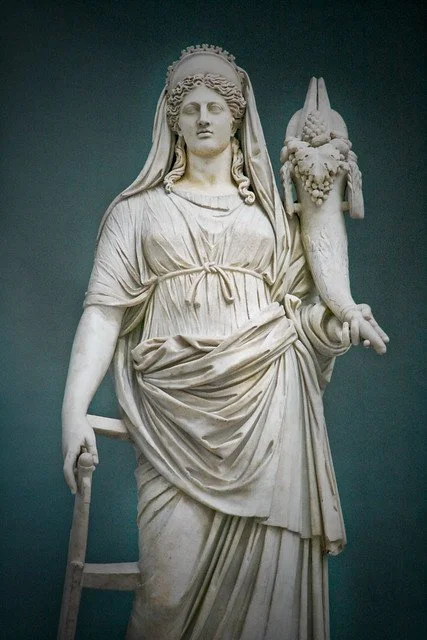
Goddess Ceres, marble statue, Vatican Museum, Rome, Italy. Photo by Albert Campra on flickr.